I lost my husband, Ethan, in a work accident.
He was thirty-two. Careful. Responsible. The kind of man who double-checked locks and called when he said he would. One ordinary morning, he left for work and never came home.
The people who should have been there for him weren’t.
Years earlier, Ethan’s family had cut him off completely because he didn’t become a doctor. His parents had planned his life down to the letter—medical school, prestige, a certain kind of marriage. When he chose a different path, they treated it like betrayal. Calls stopped. Holidays passed without invitations. Eventually, silence replaced everything.
Only his grandmother, Margaret, stayed.
She never cared about titles or status. She cared about kindness. About showing up. She welcomed me from the beginning, even when the rest of the family pretended I didn’t exist. When Ethan and I got engaged, she took off a simple, old-fashioned ring and placed it in my hand.
“This belonged to my mother,” she said. “And now it belongs with you.”
I didn’t ask. I didn’t expect it. I tried to refuse.
She closed my fingers around it and smiled. “I know exactly what I’m doing.”
When Margaret’s health declined, Ethan and I were the ones who cared for her. We drove her to appointments. Cooked her meals. Sat with her during the long evenings when she told stories about her life and the family she loved—even the ones who no longer showed her kindness.
In her final year, I was there almost every day. Near the end, she held my hand and repeated what she’d said before.
“This belongs with you now.”
Ethan squeezed my shoulder. He knew what she meant.
We had a small courthouse wedding. Just a few friends. Margaret was there in a wheelchair, beaming. No one else from his family came. No calls. No cards. No congratulations.
Ethan said it still hurt—but he had made peace with it.
Then he died.
I paid for the funeral myself. I handled the paperwork, the calls, the unbearable quiet of our apartment afterward. And suddenly, people I hadn’t seen in years appeared—his parents, his siblings, cousins I barely recognized.
They cried loudly. Accepted condolences. Spoke about Ethan like they had known him recently.
At the reception afterward, while I was still in shock, his brother Daniel approached me.
He didn’t offer comfort. He didn’t say he was sorry.
He glanced at my hand and said, casually, “So… when are you giving the ring back? My fiancée always wanted it.”
For a moment, I genuinely thought I’d misheard him.
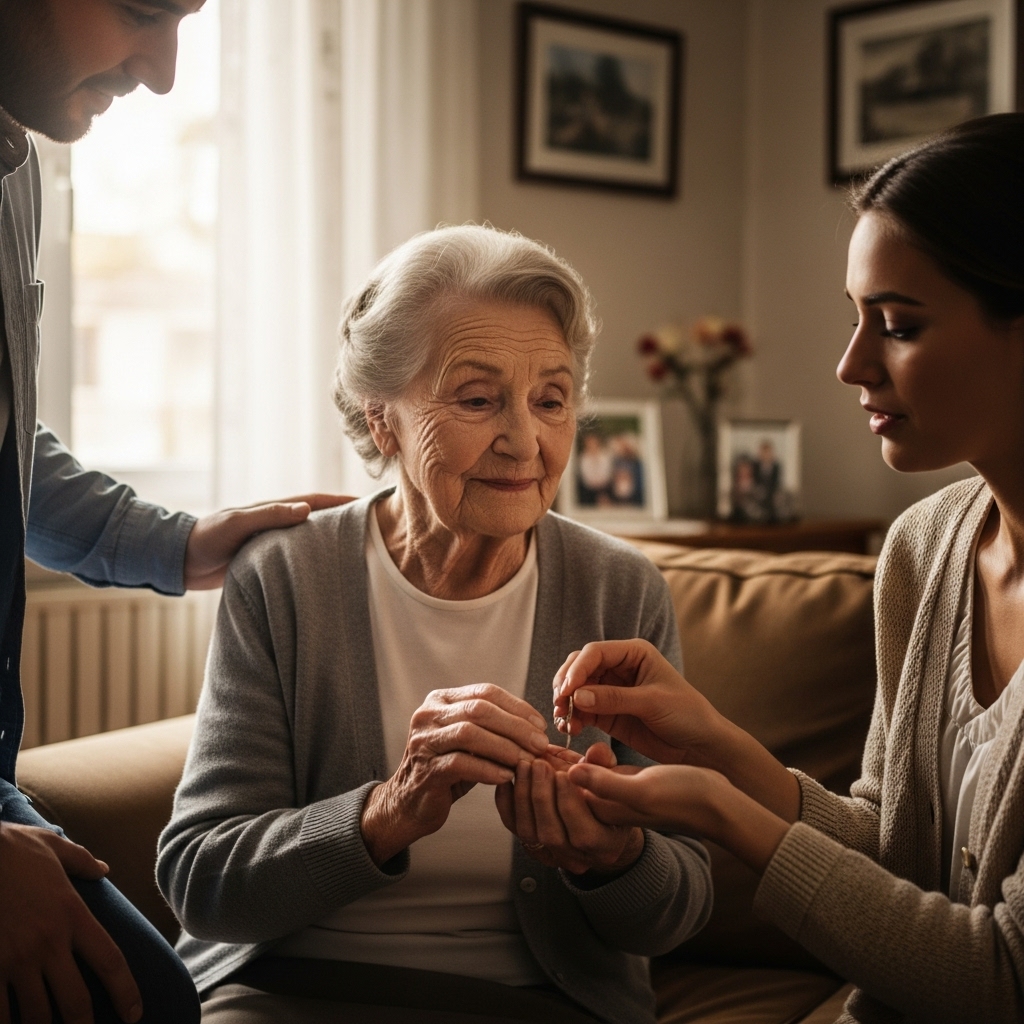
I told him no.
I explained—calmly—that Margaret had given it to me. That she’d been very clear. That it was mine.
His face hardened.
Over the next weeks, the messages started. Calls accusing me of being selfish. Emails demanding I “do the right thing.” One relative even suggested they’d get lawyers involved. Another implied I had manipulated an old woman.
I kept every message.
Eventually, I stopped responding.
Months later, Margaret’s lawyer contacted me. She had left a small estate, and part of her will specifically mentioned the ring. It stated clearly that it was gifted to me before her death, with witnesses.
The lawyer told me something else, quietly.
Margaret had anticipated this.
She had asked him to make sure I was protected—because she knew, in her words, “They’ll only come looking once it’s too late.”
When I informed the family that the ring was legally and rightfully mine, the messages stopped. No apology followed. Just silence again.
I still wear the ring.
Not because it’s valuable—but because it reminds me of who showed up when it mattered. Of the woman who chose love over blood. Of a marriage built quietly, honestly, without an audience.
They wanted the ring because it was an heirloom.
I keep it because it’s a promise.
And some things, once given with love, don’t belong to anyone else—no matter how loudly they demand them.
